I study visual perception and cognition, with a special focus on how the mind separates content (what something is or what it represents) from form (how it appears to us or how it is formatted).
Previously, I completed my undergraduate work at Yale University, where I studied Statistics & Data Science.
During this time, I was fortunate to collaborate with several different researchers, including Frank Keil (Yale), Tomer Ullman (Harvard), and Steven Franconeri (Northwestern), among others.
Beyond research, I love basketball (and have been a lifelong Celtics fan), producing music, writing, and performing stand-up comedy.
publications
(* = equal contribution)
journal articles and refereed conference proceedings
Boger, T., & Yousif, S. R. (in press). Idiosyncratic random behavior in a massive online sample. Open Mind. [pdf; data; 'demos']
Boger, T. (in press). Compression without compromise [commentary]. Behavioral and Brain Sciences. [pdf]
Boger, T., Amir, D., & Yousif, S. R. (2027). Near-random behavior in strategic games. Cognition, 278, 106737. [pdf; data; demos]
Boger, T., & Firestone, C. (2026). Complexity is a unified cognitive kind. Nature Human Behaviour. [pdf; data; demos]
Boger, T., & Firestone, C. (2026). Perceiving animacy in 'identical' images. eLife, 15, RP111179. [pdf; data; demos]
Boger, T., & Firestone, C. (2025). The psychophysics of style. Nature Human Behaviour, 9(12), 2497-2509. [pdf; data; demos]
Check out a "Spotlight" of this paper in Trends in Cognitive Sciences, written by Aenne Brielmann.
Boger, T., & Firestone, C. (2025). Visual anagrams reveal high-level effects with 'identical' stimuli. Current Biology, 35(19), R910-R912. [pdf; data; demos; merch]
Boger, T.*, Yousif, S. R.*, McDougle, S. D., & Rutledge, R. B. (2025). Random behavior is stable across tasks and time. Journal of Experimental Psychology: General, 154(6), 1571-1582. [pdf; data; demos]
Boger, T., & Keil, F. C. (2025). Mechanistic complexity is fundamental: Evidence from judgments, attention, and memory. Journal of Experimental Psychology: General, 154(2), 596-606. [pdf; data; demos]
Boger, T., & Franconeri, S. L. (2024). Reading a graph is like reading a paragraph. Journal of Experimental Psychology: General, 153(7), 1699-1704. [pdf; data; demos]
Li, Y., Wang, Y., Boger, T., Smith, K. A., Gershman, S. J., & Ullman, T. D. (2023). An approximate representation of objects underlies physical reasoning, Journal of Experimental Psychology: General, 152(11), 3074-3086. [pdf; data]
Boger, T., & Ullman, T. D. (2023). What is "where": Physical reasoning informs object location. Open Mind, 7, 130-140. [pdf; data; demos]
Hafri, A.*, Boger, T.*, & Firestone, C. (2022). Melting ice with your mind: Representational momentum for physical states. Psychological Science, 33(5), 725-735. [pdf; data; demos]
Boger, T., Most, S. B., & Franconeri, S. L. (2021). Jurassic mark: Inattentional blindness for a datasaurus reveals that visualizations are explored, not seen. In 2021 IEEE Visualization Conference (VIS) (pp. 71-75). IEEE. [pdf; demos]
Best Short Paper Award.
Boger, T., Ananthabhotla, I., & Paradiso, J. (2021). Manipulating causal uncertainty in sound objects. In Proceedings of the 16th International Audio Mostly Conference (pp. 9-15). [pdf]
conference presentations
Boger, T., & Firestone, C. (2026). Perceiving animacy in 'identical' images. Poster presented at the annual meeting of the Society for Philosophy and Psychology, 6/18/2026, Baltimore, MD.
Boger, T., & Firestone, C. (2026). Perceiving animacy in otherwise-identical images. Poster presented at the annual meeting of the Vision Sciences Society, 5/18/2026, St. Pete Beach, FL.
Firestone, C., & Boger, T. (2026). Phrasal momentum. Poster presented at the annual meeting of the Vision Sciences Society, 5/17/2026, St. Pete Beach, FL.
Boger, T., Firestone, C., & Liu, S. (2026). Who drew this? The development of visual style perception. Poster presented at the biennial meeting of the Cognitive Development Society, 4/10/2026, Montreal, Canada.
Boger, T., Firestone, C., & Liu, S. (2025). Who drew this? Children appreciate visual style differently than adults. Poster presented at the annual meeting of the Cognitive Science Society, 8/2/2025, San Francisco, CA.
Boger, T., & Firestone, C. (2025). Complexity is a unified cognitive kind. Talk given at the annual meeting of the Society for Philosophy and Psychology, 6/19/2025, Ithaca, NY.
Liu, S., Firestone, C., & Boger, T. (2025). Who drew this? Children appreciate visual style differently than adults. Poster presented at the annual meeting of the Vision Sciences Society, 5/20/2025, St. Pete Beach, FL.
Boger, T., Liu, S., & Firestone, C. (2025). Complexity is a cognitive universal: Evidence from cross-modal transfer. Poster presented at the annual meeting of the Vision Sciences Society, 5/17/2025, St. Pete Beach, FL.
Firestone, C., & Boger, T. (2025). Controlling for everything: Canonical size effects with identical stimuli. Talk given at the annual meeting of the Vision Sciences Society, 5/17/2025, St. Pete Beach, FL.
Boger, T., & Firestone, C. (2024). The psychophysics of style. Talk given at the annual meeting of the Object Perception, Attention, and Memory Conference, 11/21/2024, New York, NY.
Best Talk Award.
Boger, T., & Firestone, C. (2024). The psychophysics of style. Talk given at the annual meeting of the Society for Philosophy and Psychology, 6/20/2024, West Lafayette, IN.
William James Prize.
Boger, T., & Firestone, C. (2024). The psychophysics of style. Poster presented at the annual meeting of the Vision Sciences Society, 5/18/2024, St. Pete Beach, FL.
Franconeri, S. L., & Boger, T. (2024). When processing relationships, visual processing capacity is far less than four. Talk given at the annual meeting of the Vision Sciences Society, 5/18/2024, St. Pete Beach, FL.
Hafri, A., Boger, T., & Firestone, C. (2022). Remembering the future: Representational momentum for physical states. Talk given at the annual meeting of the (European) Society for Philosophy and Psychology, 7/21/2022, Milan, Italy.
Boger, T., & Keil, F. C. (2022). Mechanism influences intuitive object complexity. Talk given at the annual meeting of the (European) Society for Philosophy and Psychology, 7/19/2022, Milan, Italy.
Boger, T., & Firestone, C. (2022). Automatic simulation of unseen physical events. Poster presented at the annual meeting of the Vision Sciences Society, 5/17/2022, St. Pete Beach, FL.
Boger, T., Most, S. B., & Franconeri, S. L. (2021). Jurassic mark: Inattentional blindness for a datasaurus reveals that visualizations are explored, not seen. Talk given at the annual (online) meeting of the IEEE Visualization Conference (VIS), 10/26/2021.
Boger, T., Ananthabhotla, I., & Paradiso, J. (2021). Manipulating causal uncertainty in sound objects. Talk given at the annual (online) meeting of the Audio Mostly Conference, 9/1/2021.
Hafri, A., Boger, T., & Firestone, C. (2021). Melting ice with your mind: Dynamic representation of physical states. Talk given at the annual (online) meeting of the Vision Sciences Society, 5/25/2021.
Boger, T., Hafri, A., & Firestone, C. (2020). Melting ice with your mind: Representational momentum in state-space. Talk given at the annual (online) meeting othe Object Perception, Attention, and Memory Conference, 11/19/2020.
teaching
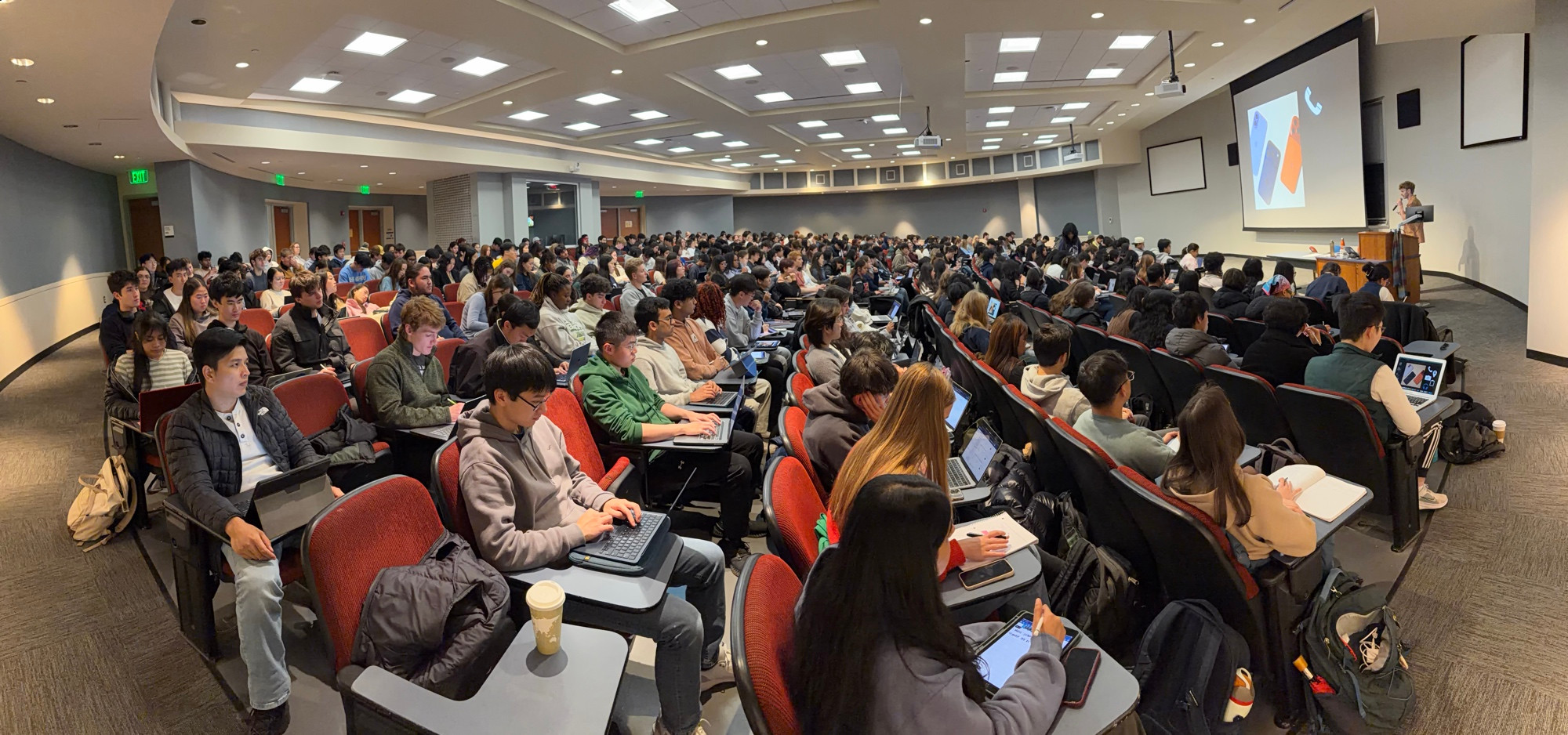
I have actively pursued teaching opportunities during my graduate career. In addition to TA’ing, I have designed two instructional experiences for undergraduate students.
In January of 2026, I created and led an "intersession" (the period between the fall and spring semesters) course called "The art of information: Information-theoretic approaches to psychology and art". The course (which met every day for 2 weeks) synthesized psychology, information theory, and art.
I created a website for the course (for posting slides, readings, etc.) — so, you can learn more about the course here.